
Criminal Court Records in McKean County
Criminal court records in McKean County are maintained through the Clerk of Courts function in the Prothonotary and Clerk of Courts office for Court of Common Pleas cases. The office is led by Vicky Madine and is located at the McKean County Courthouse, 500 West Main Street, Smethport, PA 16749. The office phone is 814-887-3270. Criminal case files may include the public docket, charging information, OTN, complaint or incident references, court events, pleas, dispositions, sentencing, probation or parole events, bail, costs, and payment activity.
Criminal matters often begin in a Magisterial District Court. McKean County has MDJ offices in Bradford, Kane, and Smethport. MDJs handle preliminary arraignments, preliminary hearings, summary offenses, traffic and non-traffic offenses, and the early stage of criminal cases that may be bound over to the Court of Common Pleas. The Court of Common Pleas then handles the county-level criminal prosecution, including pleas, trials, sentencing, post-sentence matters, and some probation or violation proceedings.
How to Search McKean County Criminal Court Records
The main online source is Pennsylvania UJS Case Search. Search by participant name, docket number, complaint number, incident number, OTN, SID, date filed, attorney, or calendar event. When searching by name or organization, choose County = McKean if the filter is available. For a Common Pleas criminal docket, look for the CP docket format and the criminal docket type. For an MDJ-level matter, look for the MJ docket format.
- Open UJS Case Search and select the strongest identifier available, such as Docket Number, Participant Name, OTN, Complaint Number, or Incident Number.
- Use McKean County filters and filing-date limits when available to avoid statewide matches.
- Open the docket and confirm the defendant, court office, docket type, charges, event history, and case status.
- Review pleas, dispositions, sentencing entries, bail, costs, restitution, and probation events where publicly displayed.
- For certified copies or documents not visible in UJS, contact the Clerk of Courts function at 814-887-3270.
The public court docket is not the same as a Pennsylvania State Police criminal-history background check. UJS warns that docket sheets should not be treated as a substitute for an official criminal-history check. Jail custody questions should be directed to McKean County inmate records sources, and unresolved bench-warrant questions may also require the issuing court or warrant records path.
Stages of a Criminal Case
A McKean County criminal case can move from MDJ proceedings into the Court of Common Pleas. The first public records may be a criminal complaint, preliminary arraignment, bail entry, preliminary hearing, or MDJ docket. If charges are held for court, the Common Pleas docket becomes the main case record. The separate court charge records path focuses on charges after arrest, while this page addresses the broader criminal case file.
Case flow: Charges Filed › Preliminary Arraignment › Preliminary Hearing › Common Pleas Filing › Pretrial / Motions › Plea or Trial › Disposition › Sentencing
| Stage | What Happens |
|---|---|
| Preliminary Arraignment | An MDJ handles early appearance, bail conditions, and initial scheduling after a criminal complaint or arrest. |
| Preliminary Hearing | The MDJ determines whether charges move forward to the Court of Common Pleas. |
| Pretrial / Motions | The Common Pleas docket may show motions, orders, conferences, continuances, plea days, and trial scheduling. |
| Plea or Trial | The docket records a guilty plea, trial result, acquittal, dismissal, withdrawal, nolle prosequi, or other disposition when public. |
| Sentencing | The case record may show sentence, probation, costs, fines, restitution, and later violation or payment events. |
What a McKean County Criminal Court Record Shows
The McKean County District Attorney page is an official local source for prosecution responsibilities, including criminal prosecutions, plea negotiations, criminal hearings, appeals, summary appeals, law-enforcement assistance, and victim restitution work.
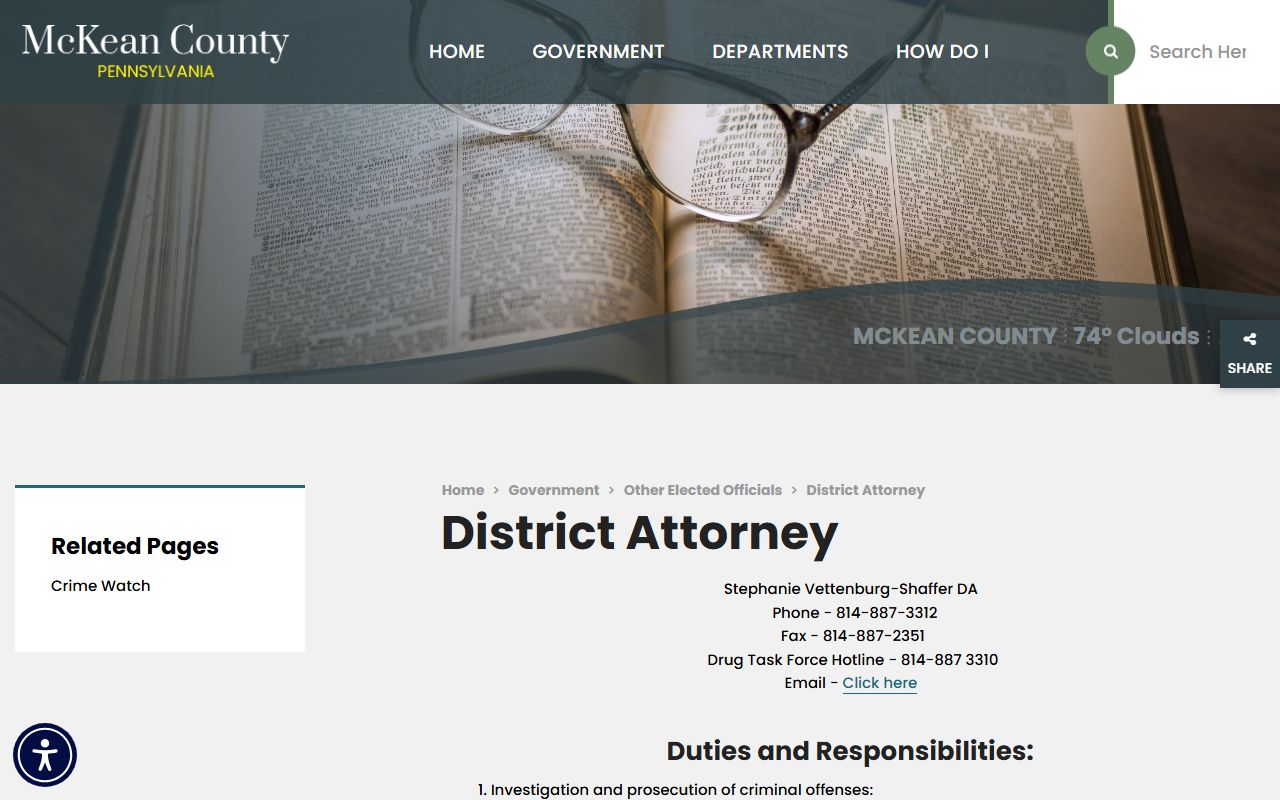
Those prosecution duties help explain why criminal court records may include plea, hearing, appeal, and restitution entries beyond the original charge list.
Public criminal dockets may show the defendant name, case caption, docket number, court office, filing date, charges, statutory references, grade, OTN, complaint number, incident number, arresting agency or officer search route, bail, attorneys, judge, events, pleas, dispositions, sentence, probation, parole, fines, costs, restitution, and payment status. Some entries may be delayed, redacted, sealed, or unavailable online.
| Field | What It Shows |
|---|---|
| Case Number | The official CP or MJ docket number used to locate the criminal court case. |
| Defendant | The person charged in the public court record, subject to redactions or juvenile restrictions. |
| OTN / Complaint / Incident | Identifiers that can connect the court docket to the charging paperwork or criminal complaint. |
| Charges | Offense names, statutes, grading, counts, and later charge-level outcomes where public. |
| Plea | The defendant's formal response or negotiated plea entry when recorded. |
| Disposition | The outcome, such as guilty, not guilty, dismissed, withdrawn, nolle prossed, acquitted, ARD, or other result. |
| Sentence | Probation, incarceration, fines, costs, restitution, bail, payment, and supervision entries when publicly displayed. |
Charges vs. Convictions
A charge is an accusation in a criminal case. A conviction is a final outcome after a guilty plea, verdict, or other qualifying disposition. McKean County criminal court records can show charges that were dismissed, withdrawn, nolle prossed, resolved through ARD, or ended in acquittal. Read each count separately because a docket may show different outcomes for different charges in the same case.
| Charge | Conviction | |
|---|---|---|
| Stage | Accusation after complaint or filing. | Final finding or plea that results in criminal responsibility. |
| Proof | Probable cause or charging standard depending on stage. | Guilty plea, verdict, or disposition entered by the court. |
| Public Record | Often public unless sealed, juvenile, expunged, or limited access. | Often public unless restricted or later removed by order. |
Reading Dispositions and Sentences
Common docket terms include disposition, plea, sentence, probation, parole, bail, surety, preliminary hearing, bound over, summary offense, misdemeanor, felony, bench warrant, expungement, limited access, nolle prossed, acquittal, continuance, restitution, and judgment. ARD means Accelerated Rehabilitative Disposition. A disposition should be read with the event date, charge count, and sentence because a case-level status can hide charge-level differences.
McKean County's 2026 Local Criminal Rule 510 adds local booking details for criminal records. For qualifying defendants charged with a third-degree misdemeanor or greater offense, the rule requires fingerprints and photographs within 10 days after arrest or bail-order entry at Bradford City Police Department, 18 Kennedy Street, Bradford, or McKean County Jail, 17013 Route 6, Smethport, unless another listed process applies. The rule assesses a $100 booking fee after conviction or ARD, with exclusions for dismissed, withdrawn, nolle prossed, acquitted, or summary-only guilty plea cases.
Sealed vs. Expunged Records
The McKean County Public Defender page identifies Chief Public Defender Philip Clabaugh and explains representation for qualifying criminal matters, juvenile delinquency, adult felony and misdemeanor offenses, summary offenses involving possible incarceration, preliminary hearings, trials, appeals, and related criminal proceedings.
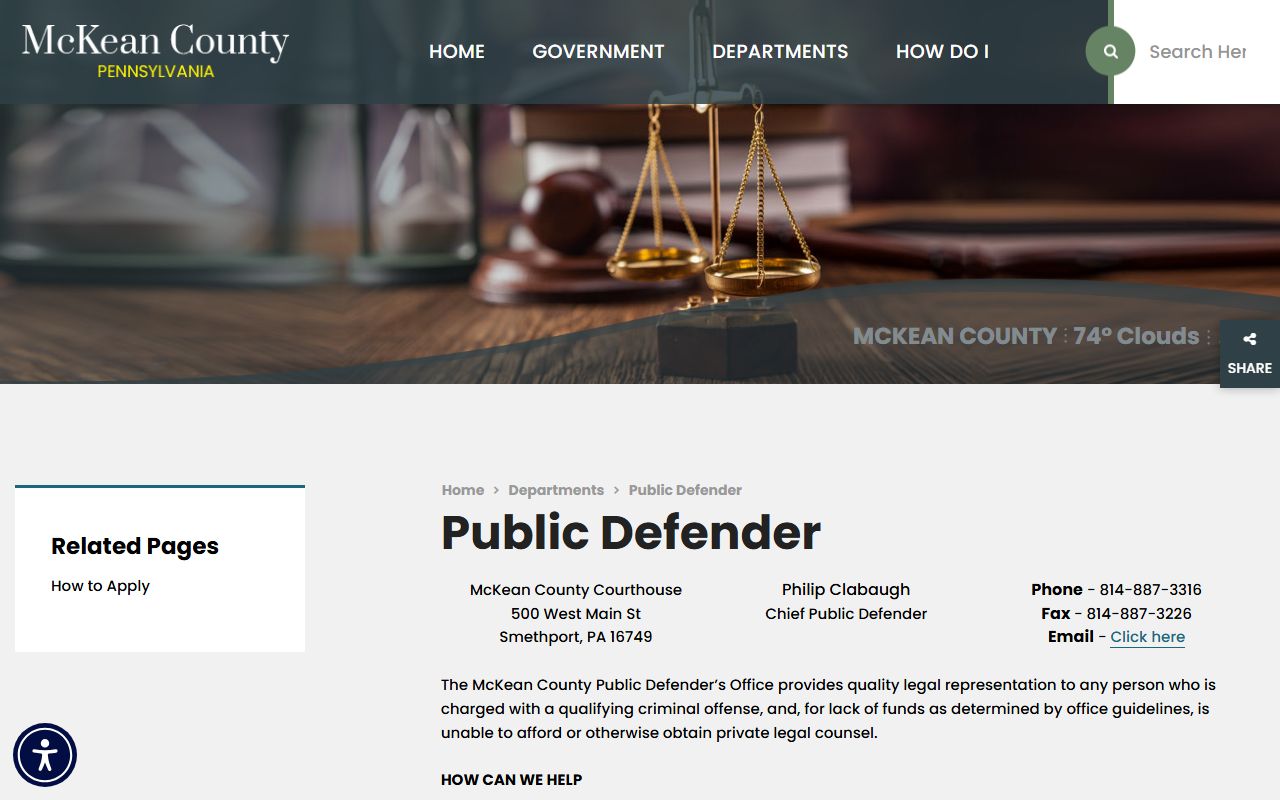
Eligibility for counsel is separate from public access, but the same criminal case stages often appear in the court record.
UJS warns that juvenile cases, expunged records, limited-access Act 5 of 2016 cases, and some civil Common Pleas matters may not display in public search results. Adult criminal-history expungement is governed by 18 Pa.C.S. Section 9122, and juvenile-record expungement is governed by 18 Pa.C.S. Section 9123. A person seeking relief should identify the docket, determine whether the case is adult criminal, juvenile, summary, ARD, non-conviction, or limited-access eligible, and confirm any signed order with the Clerk of Courts and relevant state systems.
| Sealed or Limited Access | Expunged | |
|---|---|---|
| Visibility | Hidden from ordinary public display but may still exist for authorized access. | Removed or destroyed according to the court order and applicable state process. |
| Common Examples | Juvenile, victim-sensitive, confidential, or Act 5 limited-access matters. | Eligible adult or juvenile records under Pennsylvania expungement statutes. |
| Next Step | Review the order or court rule controlling access. | Obtain and keep the signed expungement order; do not rely only on UJS disappearance. |
Public Access to Criminal Court Records
For court case information, start with UJS and then use the Clerk of Courts for Common Pleas criminal files or the correct MDJ office for lower-court matters. The Pennsylvania Right-to-Know Law can apply to agency records, but it does not override court rules on nonpublic court files. Sheriff, jail, or district attorney administrative records that are not part of a sealed investigation or court file may require an open-records request rather than a docket search.
The McKean County Public Defender application page explains the intake route for eligible criminal defendants.
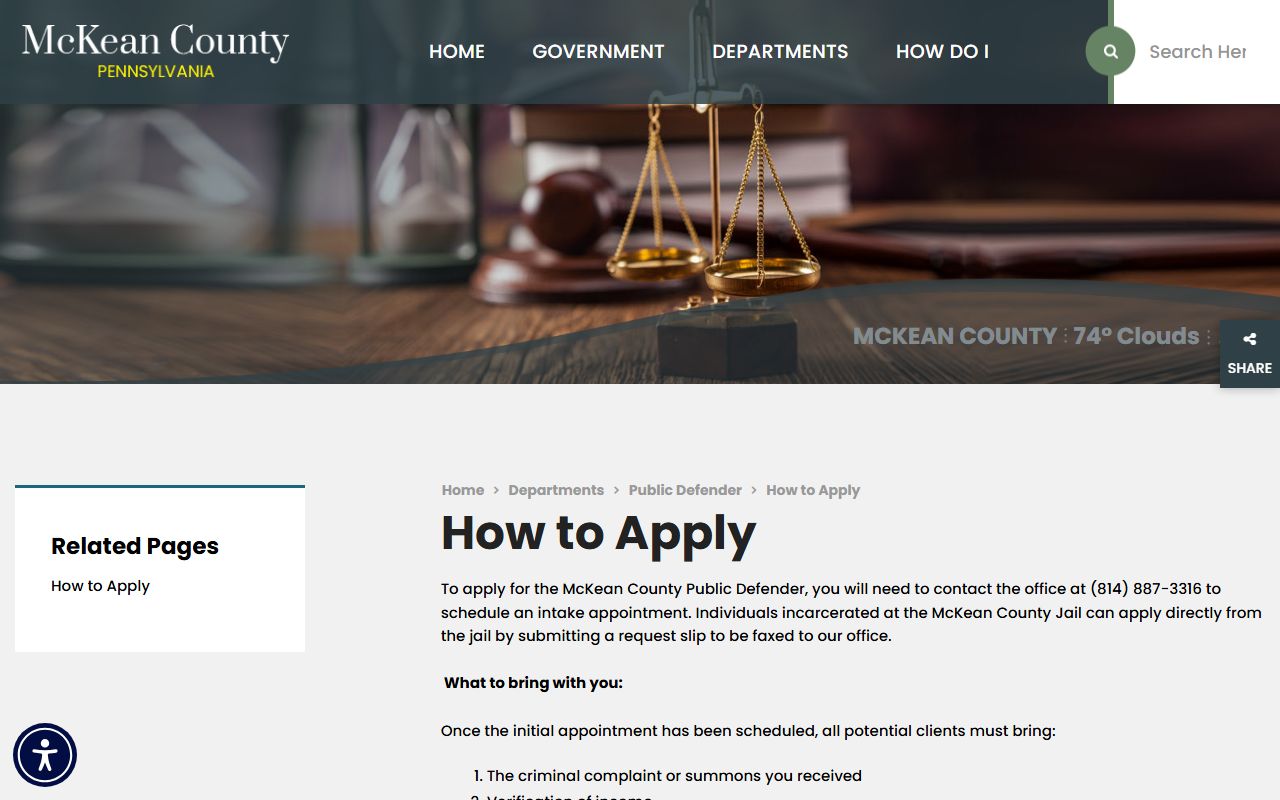
That application process is relevant when a criminal docket shows pending charges and the defendant may need representation before the next event.
Key Statutes:
18 Pa.C.S. Section 9122 - governs adult criminal-history expungement eligibility in Pennsylvania.
18 Pa.C.S. Section 9123 - governs expungement of juvenile records in Pennsylvania.
Background Check Considerations
A criminal court docket is useful for checking case status, but it is not the same as an FCRA-compliant employment, tenant, credit, insurance, or licensing background check. UJS also warns that public docket sheets should not replace a Pennsylvania State Police criminal-history background check. If the purpose is regulated screening, use the legally required screening channel and verify results with the originating court or agency.
The Pennsylvania adult criminal-history expungement statute is an official reference for when an adult record may be eligible for removal.
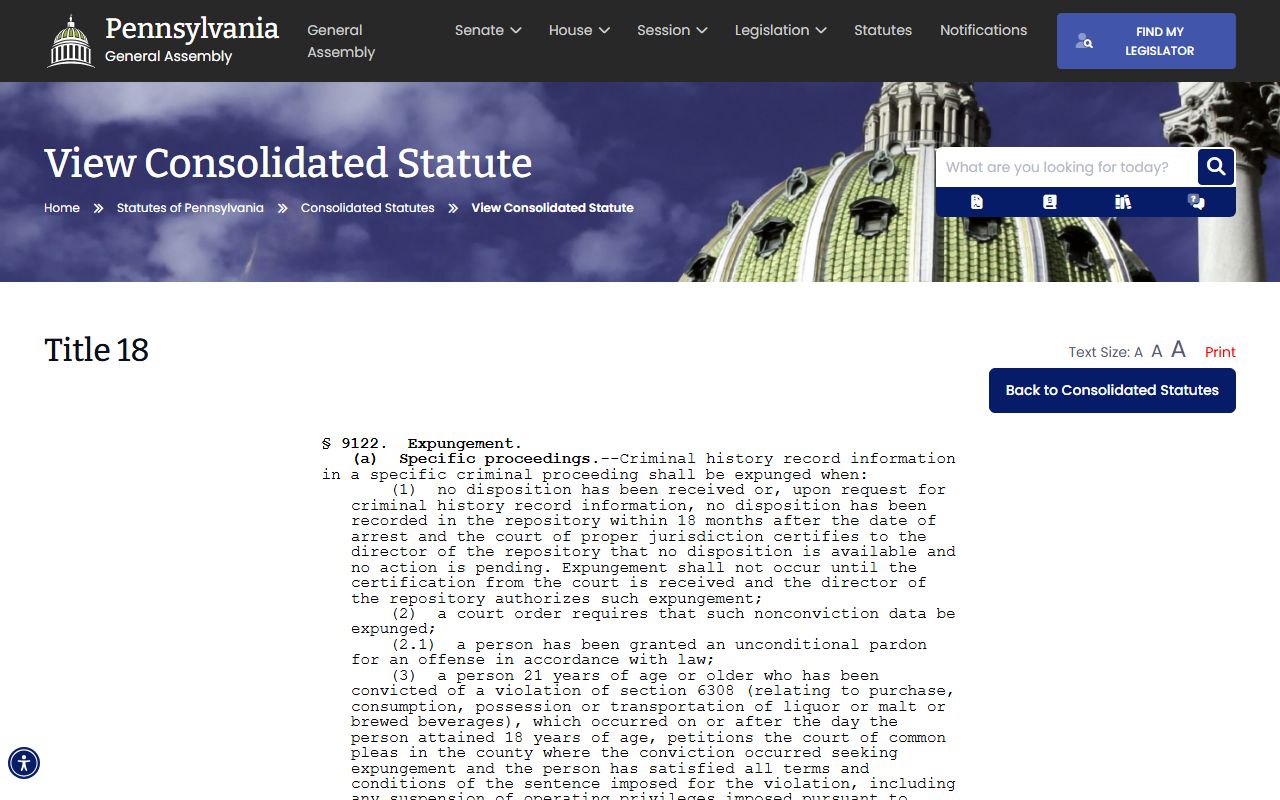
Expungement rules affect whether a criminal record remains visible in public search tools and whether additional verification is needed.
Important: McKean County Court Records is not a consumer reporting agency, and this information may not be used for FCRA-regulated screening decisions.
Restricted Criminal Court Records in McKean County
Restricted criminal court records include juvenile matters, expunged cases, limited-access records, sealed warrants, victim-sensitive information, confidential addresses, personal identifiers, and records affected by court order. Search warrants may be sealed during an investigation. Juvenile delinquency records are not ordinary public adult criminal records. If a case is missing from UJS, confirm with the Clerk of Courts or the issuing MDJ before assuming the record does not exist.
For active criminal proceedings, the District Attorney's Office is led by Stephanie Vettenburg-Shaffer, phone 814-887-3312, and the Public Defender's Office is led by Philip Clabaugh, phone 814-887-3316. Public Defender applicants call for intake; incarcerated applicants at McKean County Jail may apply by submitting a jail request slip to be faxed to the Public Defender. These contacts do not replace the Clerk of Courts for records, but they are important when the docket shows pending criminal charges, appeals, or representation issues.